Tutorial creator
You are explaining a process and need the viewer to understand each action in order.
A clear opening, logical sequence, and readable labels keep the lesson easy to follow.
flexclip for youtubeCreator workflow
This is a guide to FlexClip-related topics, not the FlexClip editor. The linked Vidione home page offers browser timeline editing after sign-in without a subscription, including subtitles and MP4, WebM, or CapCut draft export up to 1080p. AI generation needs a subscription; prompts, articles, and URLs on this site do not prefill or start a video.
This flexclip tutorial youtube guide walks through a repeatable path from raw footage to a focused video draft, including setup, editing choices, publishing checks, and practical fixes.
See how to shape edits around YouTube pacing, thumbnails, titles, and audience expectations.
Review a broader video-making workflow for turning an idea into an organized visual draft.
Use a template-led approach when your video needs a consistent structure or branded opening.
Explore an AI-focused editing route for organizing footage and refining a first cut.
Before opening the editor, define the job of the video and collect only the material needed to support it. A small amount of preparation makes every FlexClip decision easier to evaluate.
You are explaining a process and need the viewer to understand each action in order.
A clear opening, logical sequence, and readable labels keep the lesson easy to follow.
flexclip for youtubeYou have product footage, a few photos, and one message that needs to reach a YouTube audience.
A focused edit gives the message a beginning, useful middle, and direct next step.
flexclip video makerYou want several uploads to feel related without rebuilding the visual language from scratch.
Reusable layouts help maintain recognizable titles, colors, and transitions across episodes.
flexclip templateYou are adapting a longer explanation into a tighter highlight or introduction.
A deliberate selection of the strongest moments produces a concise draft instead of a crowded summary.
flexclip long to shortUse this three-part sequence as a baseline. The goal is not to add every available effect; it is to make the story understandable before polishing the presentation.
Write one sentence describing what the viewer should know or do by the end. Gather the main video clips, images, logo assets, and music you actually need. Put the strongest context near the beginning so the project has direction before you start styling it.
Import the source material, place clips in a sensible order, and trim pauses or repeated points. Add text only where it clarifies a name, step, quote, or key idea. Preview the sequence several times at normal speed rather than judging every shot in isolation.
Balance the rhythm, check that text remains readable, and make sure the audio does not overpower speech. Watch the full draft once without editing. Then prepare a useful title, description, thumbnail concept, and audience-facing call to action.
A before-and-after comparison is most useful when it exposes a decision, not when it simply makes the second frame look busier. Treat the pair below as an editing diagnostic.
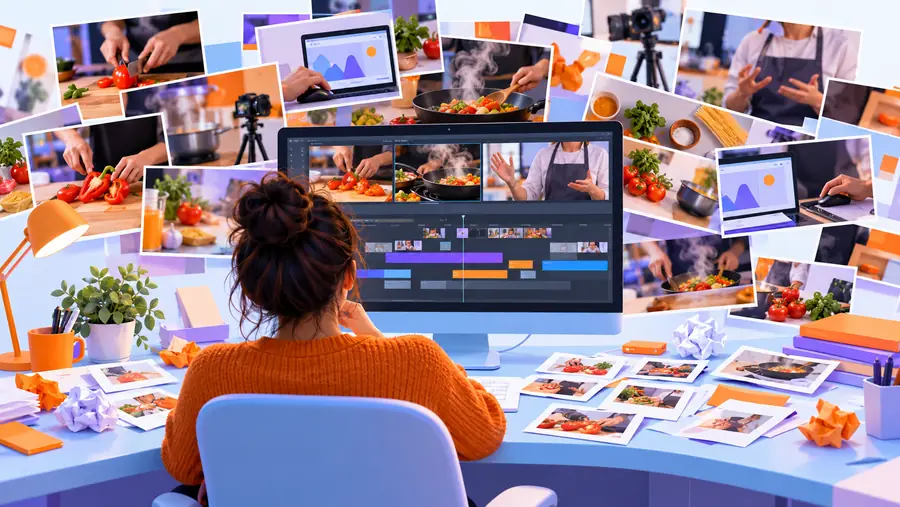

Illustrative comparison: simplify first, decorate second.
Once the basic workflow is comfortable, improve consistency by deciding what the route cannot solve automatically. These limits are useful guardrails for a better FlexClip project.
Editing tools can arrange material, but they cannot decide what your audience most needs to understand.
WorkaroundWrite the promise of the video in one sentence before choosing clips or effects.
A polished layout will not remove distracting noise, missing context, shaky framing, or unclear speech.
WorkaroundRecord a short replacement, use a supporting image, or cut the weak moment rather than hiding it with effects.
A clean export does not ensure clicks, watch time, search visibility, or audience retention.
WorkaroundTreat packaging and analytics as a separate cycle: test the title and thumbnail, then study where viewers leave.
Transitions, animated text, and music can compete with the lesson when they are used without a reason.
WorkaroundAssign each effect a job, keep a consistent visual language, and remove anything that distracts from the spoken point.
Use the FlexClip workflow as a practical starting point: define the message, assemble the essential material, make the first cut, and review it as a viewer. The strongest tutorial is usually the one that removes confusion rather than adding decoration.
Prepare a clear topic, a short description of the viewer’s expected takeaway, and the footage or images needed to support it. It also helps to have any logo, music, captions, or brand references available before you begin editing.
Start with context that tells viewers why the video matters, then arrange the main explanation in a logical order. Finish with a concise recap or next step, and use text or visual changes only when they make that structure easier to follow.
Make a plain first cut before adding decorative effects. Remove repeated points, keep on-screen text short, and preview the whole video at normal speed so you can notice pacing problems that are easy to miss while editing one clip at a time.
A tutorial can improve your process and help you produce clearer, more consistent drafts, but it cannot guarantee audience response. Topic choice, thumbnail design, title, distribution, and viewer behavior all influence how a finished upload performs.
Templates are useful when you want a repeatable structure or recognizable branding, especially across a series. They should still be adjusted to fit the subject, pacing, and audience of each individual video rather than used unchanged.