Choose a readable source
Pick an image with a clear subject and enough space around it for the intended crop or camera movement. A crowded frame leaves less room to animate cleanly.
Image-led video
This is a guide to FlexClip-related topics, not the FlexClip editor. The linked Vidione home page offers browser timeline editing after sign-in without a subscription, including subtitles and MP4, WebM, or CapCut draft export up to 1080p. AI generation needs a subscription; prompts, articles, and URLs on this site do not prefill or start a video.
Start with a clear still image, then decide what should move and what must stay unchanged. This guide helps you plan an image-to-video concept and evaluate the result without assuming every editor offers the same controls.
Link only. Nothing written or selected here is sent to the destination.
Open Vidione editorAn image-to-video workflow uses a still as the visual starting point and aims for a moving clip, rather than building every frame from scratch.
One photo does not reveal hidden surfaces or specify exactly how a person or object should move.
WorkaroundChoose a modest camera move and describe the intended motion explicitly.
Generated motion can alter lettering, logos, hands or product features that need to remain exact.
WorkaroundInspect individual frames and use conventional editing for accuracy-critical elements.
Upload rules, motion settings, output options and access conditions depend on the tool reached through the CTA.
WorkaroundReview that tool’s current interface and terms before committing to a workflow.
Motion can give a static visual a beginning, middle and end. The useful question is whether movement adds meaning or merely makes the image busier.
Pick an image with a clear subject and enough space around it for the intended crop or camera movement. A crowded frame leaves less room to animate cleanly.
Describe a gentle pan, push-in or subject action, plus anything that must remain fixed. A focused instruction makes the image-to-video goal easier to judge.
Check the full clip for distorted details, awkward transitions and unexpected changes. If the source is a client asset, confirm permission to use it.
Flexclip is one name people encounter while researching video creation. These related routes separate an image-led idea from workflows that begin with words or existing footage.
Use these distinctions to write a brief and check the result. They describe the input and intended output, not guaranteed features of a particular product.
Source image
One captured moment
Intended video
A sequence with a visible start and finish
Source image
Implied by composition
Intended video
Expressed through camera or subject motion
Source image
Fixed within the original crop
Intended video
May shift as the scene moves
Source image
Not shown in the source
Intended video
May need to be inferred if revealed
Source image
Visible in a single frame
Intended video
Must remain legible and consistent across frames
Source image
Inspect the composition
Intended video
Watch the sequence and inspect problem frames
These briefs show when an image-to-video idea is useful—and when a different starting point may serve the creator better.
A clean product photograph needs subtle movement for a short presentation.
Request a slow push-in, then verify the label and package shape frame by frame.
flexclip ai text to videoA landscape photograph could introduce a place before recorded footage begins.
Use restrained camera motion; switch to footage-based editing if the trip is already filmed.
flexclip long to shortA character illustration suggests a scene, but the action is not yet defined.
Write the action first and compare a text-led approach with animation from the drawing.
flexclip ai text to videoA finished recording needs a concise opening, not a newly imagined scene.
Shorten the existing footage instead of asking a still to recreate it.
flexclip long to short
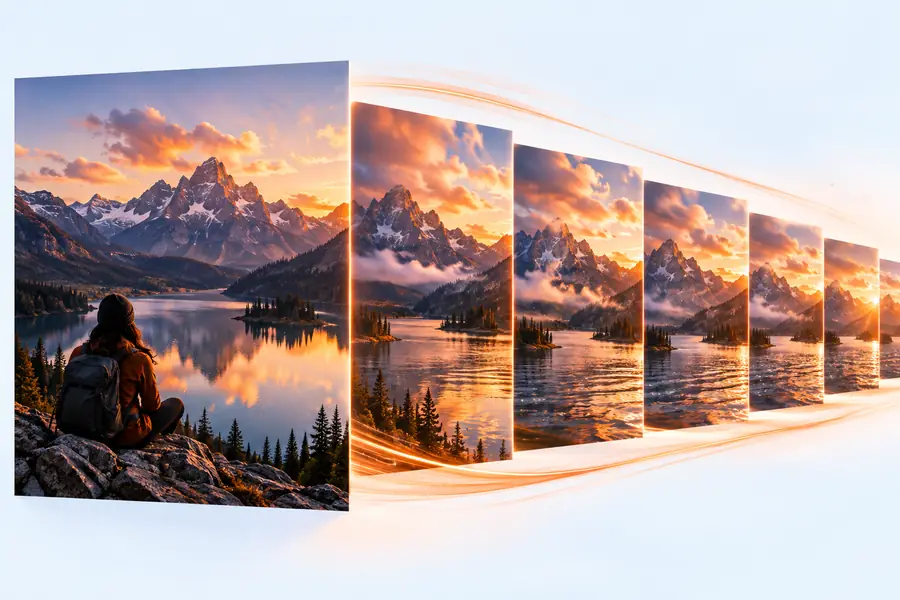
Illustrative images only: these are not documented before-and-after frames or evidence that one was generated from the other.
Bring a source image you have permission to use and a short description of the movement. Check the destination tool’s available features and terms, then review any result for visual consistency before sharing it.
The query describes using an image as the starting point for a moving video. It does not, by itself, confirm which controls or generation methods are available in a particular tool.
A photo can establish the subject, colors and initial composition. It cannot show hidden surfaces or define every later frame, so simpler motion is generally easier to evaluate.
Identify the main subject, describe one intended movement and state which details should remain unchanged. For a product image, that might mean a slow camera push-in while keeping packaging text stable.
Watch it from beginning to end and inspect frames where motion or framing changes. Check subject consistency, readable text and whether you have permission to use the source image.